
Built to Last: Preserving America’s Landmarks at 250
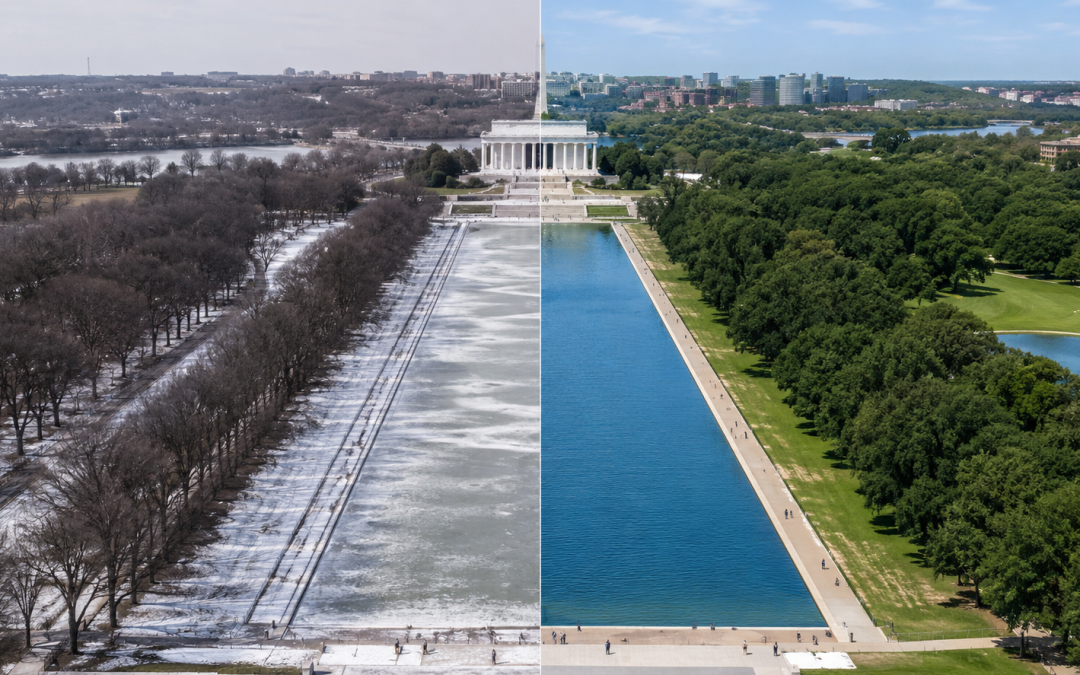
What America’s most iconic structures can teach us about durability, restoration, and the building systems that support long-term performance. The Lincoln Memorial Reflecting Pool recently underwent a major restoration, giving one of America’s most recognizable landmarks a cleaner appearance and a renewed finish that reflects the vision of its original design. Most people notice the fresh blue water. Some noticed the challenges that surfaced during construction. But almost nobody talks about what it actually takes to restore a reflecting pool of this scale. And that’s where the real story begins.
In late April 2026 the President announced on-site that the Reflecting Pool floor would be resurfaced in an “American-flag blue” coating, targeting completion by July 4. This announced scope – primarily waterproofing the entire pool floor – was funded by the National Park Service (NPS, a division of the U.S. Department of the Interior). On April 3, 2026, NPS awarded a firm-fixed-price, sole-source contract (No. 140P2026C0028) to Atlantic Industrial Coatings, LLC, a Virginia-based applicator, for about $6.9 million to seal the pool basin. The tight schedule was justified by the July 4 deadline, invoking an “urgent” exemption to normal review processes.
At the same time, the project included a new water-treatment component. NPS separately contracted Ohio firm Greenwater Services (owned by John Cafaro) to install an advanced nanobubble filtration/ozone system to help kill algae. Press reports later showed roughly $1.7 million paid to Greenwater in April. (Together these contracts brought the planned budget to about $13–15 million.) The accelerated approach drew criticism: the Cultural Landscape Foundation sued in mid-May 2026 to stop work, arguing the project lacked required historic-preservation reviews. The court hearing took place on May 21, 2026, but work continued.
By early June the renovation was essentially complete. Atlantic Industrial Coatings reported on June 4, 2026 that, “10 weeks ago yesterday we got a phone call… [and] today… we watch the Reflecting Pool fill up”. Within a few days of refilling, however, problems emerged: green algae turned the water foul, and visitors began finding hundreds of deep-blue coating fragments floating near the surface. News outlets documented algae blooms and chips of liner material by mid-June. The administration responded that repairs would be made under warranty, but the unexpected issues have dominated the story ever since.
How did it go?
- Apr 3, 2026: NPS (via Denver Service Center) awards a no-bid contract to Atlantic Industrial Coatings (VA) to resurface the Reflecting Pool, amount ~$6.886M. Completion was originally due by July 4.
- Apr 23, 2026: Presidential announcement at the site commits to a blue coating; deadline is Independence Day.
- Apr 2026: NPS contracts Greenwater Services (OH) for nanobubble filtration (approximately $1.7M).
- May 8, 2026: DOJ/Interior announces plan to allocate ~$13.1M to complete the work (later contract mods raised it further).
- May 10, 2026: NPS briefing to Congress reports project nearly done (prior to CLF lawsuit).
- May 11, 2026: Cultural Landscape Foundation files suit to halt the project for lack of review.
- June 4, 2026: Atlantic Industrial Coatings posts that the pool is being refilled after coating work.
- June 5, 2026: NPS confirms renovation complete; pool refilling.
- June 14, 2026: Rapid algae bloom appears in the pool despite new filtration (ABC News).
- June 18, 2026: Media publish photos of blue liner peeling (e.g. Scientific American).
- June 23, 2026: Interior Dept. announces the pool will be drained for repairs under warranty.
- June 24, 2026: Congressional oversight letter sent to Atlantic Coatings (reports total contract ~$14.7M).
*Primer product not publicly specified; likely a proprietary epoxy.
Choosing the Waterproofing System
Based on public sources, the reflecting pool’s basin was sealed with a fully liquid-applied membrane. Reports indicate NPS and Atlantic Coatings chose a 2-component elastomeric liner: first an epoxy primer coat over the concrete slabs, followed by a thick polyurea-based coating tinted “American flag blue”. A Rhino Linings press release confirms its products were used, and investigative articles identify the material as Rhino Linings Pipeliner 5000 – a 100%-solids, hybrid polyurethane/polyurea spray lining intended for potable water. Pipeliner 5000 is NSF-61 certified for drinking water and is applied by plural-component spray (as on pipelines or pools).
No official specification has been released, but the contract documents (not yet public) likely called for a seamless, high-build membrane. AIC’s social media thanks partners Rhino Linings and Creative Polymers (the latter a polymer coatings firm) for the project. We have not found a public bid or spec sheet naming the exact products, so identification relies on these press reports and industry sources. If needed, verification steps include obtaining the NPS contract/solicitation records (e.g. via FOIA) and Atlantic’s submittal documents, or contacting Rhino Linings and Creative Polymers directly for project confirmation.
Product/System Table: (verified and inferred system components)
(“DFT”= dry-film thickness in mils. Warranty: no public disclosure; these systems commonly carry 10+ year coverage if properly applied.)
The polyurea liner was chosen for its seamless coverage and durability. Its advantages (see next section) include fast cure and high chemical/abrasion resistance. Alternatives such as torch-applied bituminous or sheet membranes (e.g. PVC/EPDM) are possible for basins, but none were reported used here. Given the historic nature of the pool, the preservation team likely preferred a fix that could apply directly over the existing substrate with minimal joints.
So… Why Liquid-Applied?
Liquid-applied waterproofing membranes are polymer coatings applied in fluid form that cure monolithically (into a single continuous film) on the substrate. For architects and owners, their appeal lies in seamless coverage and flexibility. Unlike sheet membranes (which have seams, laps and joints), a properly applied liquid membrane forms a one-piece barrier across the entire surface. This means no overlaps or adhesive joints that can become leakage paths. Installation is straightforward: the material can be sprayed, rolled or troweled into every corner and detail without cutting or fitting panels.
Key advantages include rapid application and adaptability. A spray crew can cover thousands of square feet in a day, even on irregular shapes (pipes, corners, steps), much faster than hand-laying sheet panels. Most liquid membranes remain quite flexible when cured, so they expand, contract, and bridge small cracks as structures move. In harsh weather or on mobile substrates, this elasticity helps prevent tearing. (By contrast, rigid cementitious or thin paints would crack easily.) Modern polyurethanes/polyureas cure within minutes under good conditions, eliminating lengthy waiting.
Of course, liquid systems require careful application: the substrate must be clean, compatible, and sufficiently dry. Areas of liquid coating must be re-coated within the manufacturer’s specified window (often a few hours) to ensure full inter-layer bonding. If limits are violated, delamination can occur (see below). In general, designers must ensure the chosen membrane is rated for UV exposure or traffic if the surface will be walked on. But when done correctly, liquid membranes are a robust, durable solution – they often have lower life-cycle costs than multiple layers of sheet material, especially in complex details.
Bringing the Design to Life (Installation)
The project was executed by Atlantic Industrial Coatings under NPS supervision. Although the full installation record is not public, the general sequence can be reconstructed. After draining the pool, crews pressure-washed and prepared the concrete slab floor (removing debris, cleaning joints and repairing minor cracks). A two-part epoxy primer was then applied to the clean concrete (to improve adhesion and seal minor pores). Next, the Pipeliner 5000 membrane was sprayed onto the floor in multiple passes. Each polyurea coat cures in seconds, but the final lining was likely built up to a thick cross-section (tens of mils). Finally, the pool was refilled and allowed to stabilize.
Throughout this process, quality controls were essential. The prime contractor (Atlantic) would have been responsible for surface cleanliness, mixing, and coating application. NPS inspectors and/or third-party engineers likely monitored the work. Inspection steps included verifying the primer type and coverage, measuring membrane thickness (using wet-film and dry-film gauges), and checking that curing times and recoat windows were met. After curing, adhesion tests (e.g. pull-off tests) would confirm bond strength to concrete. Only when the membrane passed these checks would the pool be refilled. Any identified defect (e.g. pinholes, holidays) would have been repaired before acceptance. (The Atlantic Industrial Coatings website later noted that only a “very small part” of the pool required touch-up after draining.)
Unexpected Challenges
Despite planning, the project encountered notable issues immediately after completion. Within a week of refilling, green algae blooms began to form, turning much of the water murky. Nearly simultaneously, visitors spotted pieces of the new blue liner detaching and floating in the pool. By mid-June multiple media outlets published images of coating shards drifting on the surface.
Interior Department records confirm the contract value grew well beyond the initial $6.9M. By late June the total for Atlantic’s work (with amendments) was about $14.7 million. Congress and the press scrutinized the cost overrun (nearly seven times the original figure) and the rushed schedule. Atlantic Coatings publicly stated that the delaminated patches were minor and would be fixed under its warranty.
Investigations into the failures are ongoing. The official response has emphasized possible vandalism (including arrests for alleged tampering), but experts in coatings and pool maintenance have pointed to technical causes (see next section). In any case, NPS has drained portions of the pool for repairs, and the incident underscores how even a well-intentioned restoration can produce surprises.
What Causes Waterproofing Failures?
Most waterproofing problems trace back to preparation and application, not the product itself. Industry studies estimate about 90% of membrane failures are due to poor workmanship or planning. Common culprits include:
- Inadequate surface prep: Dirt, oil, or moisture on the substrate can prevent adhesion. If concrete isn’t fully cured or is damp, liquid membranes may not bond. Overlooked details (loose particles, uneven surfaces) often cause subsequent leaks.
- Wrong product or installation: Using a coating outside its intended use (e.g. non-potable-water epoxy where a potable-grade lining was needed) can lead to failure. Not following the manufacturer’s instructions (mix ratio, cure time, temperature limits) is another risk.
- Adhesion and curing errors: For example, polyurea coatings typically require the next coat within hours for full bonding. If Atlantic’s polyurea layers were sprayed too far apart, the layers might not chemically fuse. As one expert noted, “When applying these coatings, you need to get the next coat on within 24 hours” or interface strength suffers.
- Movement and detailing: Cracks or joints in the slab can telegraph through a membrane if not properly treated with reinforcement or flexible detail coatings. Any structural movement (thermal shifts, settling) stresses the membrane.
- Environmental exposure: Some coatings are UV-sensitive. If a liquid layer is left exposed long-term without UV-protective topcoats, it can degrade. (Here, the liner was underwater, which protected it from sunlight but introduced other factors like osmotic gradients.)
The root causes of this project’s delamination are still under review. Apart from possible human interference, sources note that Atlantic applied the new membrane very quickly and in hot weather. Even slight residual moisture or timing issues could allow blisters or peeling. In summary, failures almost always come down to preparation, material choice, or workmanship.
The Finished System
The completed system consists of a uniform blue elastomeric liner across the 7‑acre pool floor. The blue coating presents a glossy navy finish (often compared to “the denim of the American flag”). Atlantic Coatings has committed to repairing any peeled sections under its warranty. Details of the official warranty (duration, terms) have not been published; typically such projects include at least a 5–10 year applicator guarantee plus product warranties. Given the NSF-61 rating and 100%-solids formulation, the Rhino polyurea itself is inherently durable against water and chemicals.
Routine maintenance will be needed to preserve the finish. NPS has already begun aggressive algae control (hydrogen peroxide dosing, filtration) after the first blooms. In the long term, the membrane should be periodically inspected (looking for damage or wear at the edges and joints). If cracks or damage appear, spot repairs can be made by cleaning and recoating the affected area. The pool deck and inflow systems will continue to require regular cleaning to prevent sediment and nutrients from encouraging algae.
Expectations for service life are optimistic but reasonable. Industry data suggest properly installed liquid polyurethane membranes typically last 10–25 years under building conditions. European guidelines (ETAG 005) certify liquid systems for working lives up to 25–30 years under ideal conditions. Because the reflecting pool’s membrane is hidden and not exposed to foot traffic (and is underwater most of the time), it could easily reach the upper end of that range. A well-built liquid membrane, if kept clean and protected, can sometimes outlast more conventional sheet systems. However, the coatings are not invulnerable: UV from sunlight (at the water surface), freeze–thaw of the pool walls, or chemical imbalance in the water could eventually degrade the surface. If needed, the liner can be recoated with a fresh elastomeric topcoat after a decade or two to extend life.
How Long Should a Waterproofing System Last?
The design life of a waterproofing system depends on its materials and conditions. Polyurethane-based liquid membranes like the Reflecting Pool’s are generally expected to last at least 10–20 years. Industry sources note “expected service lives vary between 10 and 25 years” for these systems, assuming correct installation. European standards provide for up to 30 years for top-tier systems. In practice, most owners plan to monitor and possibly refresh the coating at the mid-point of its life.
To achieve such longevity, strict installation standards are critical. Substrate prep (removing contamination and moisture) and proper membrane thickness (per manufacturer) are cited as “central to long-term success”. If a coating is protected from sunlight (for example by water cover or a paving overlay), some guidelines suggest it may not need replacement for the life of the structure. Architects should plan maintenance in their asset management: periodic inspections (e.g. every 5–10 years) can catch minor issues before leaks start. In many cases, a light cleaning and touch-up of the membrane can significantly extend life, avoiding a full re-waterproofing.
Lessons for Architects & Building Owners
This project offers several concrete takeaways for design and preservation:
- Specify complete systems. Detail the exact membrane system (primer + reinforcement + finish) in specifications. Insist on manufacturer-approved products and installers. Require documented adherence to mixing ratios, temperature/humidity limits, and recoat windows.
- Emphasize preparation. Performance depends on meticulous prep. In the submittals, demand proof that the concrete is clean, crack-free, and dry (e.g. moisture tests). Specify repair of any defects before coating. Even minor debris can cause blisters.
- Hire proven applicators. Liquid waterproofing is a specialized trade. Use contractors certified or experienced with the selected membrane. Include manufacturer or third-party oversight if possible.
- Build in quality control. Mandate inspection steps: for example, require dry-film thickness (DFT) measurements, adhesion (pull-off) tests, and continuity checks after curing. Any holidays or thin spots must be fixed immediately.
- Allow adequate schedule. Do not rush the cure. Polyurea and epoxies may require quiet periods (low traffic, shade) to set. Plan the project timeline with buffer, not deadlines that force cutting corners.
- Plan for maintenance. Even the best waterproofing can degrade. Include provisions (and budget) for routine cleaning and yearly visual inspections. Specify easy access for future repairs (drain, repair, refill).
- Document and warranty. Record each installation step for future reference. Require a clear warranty from the contractor and manufacturer. Confirm who is responsible for what (e.g. Atlantic agreed to repair any liner failures under its warranty).
- Think lifecycle costs. A higher upfront investment (quality products and care in application) pays off in fewer leaks and longer performance. During budgeting, weigh higher-grade membranes against expected longevity.
These lessons apply to any waterproofing scope — from roof decks to basements. Liquid-applied membranes can provide excellent durability, but only if the design team treats them as a critical building system, not just a cosmetic coat.
Conclusion
The Lincoln Reflecting Pool renovation illustrates both the promise and pitfalls of modern liquid waterproofing. A state-of-the-art seamless membrane delivered a spectacular new finish, yet early glitches highlight how exacting the work must be. For architects and owners, the key lesson is that long-term performance depends on thoughtful specification and execution. By choosing proven materials, enforcing strict quality control, and planning for maintenance, we can “build to last” – even as America’s landmarks themselves reach the 250-year milestone.
Great content! Keep up the good work!